

Key Takeaways
- Gentle, regular movement can help manage arthritis symptoms by supporting joint flexibility and muscle strength.
- Low-impact exercises like walking, water-based activities, and chair yoga are comfortable options for your joints.
- To start a new routine safely, you can warm up, start slow, and pay attention to your body’s signals.
- A supportive community in a senior living environment can offer motivation and social connection, which are key to well-being.
Find Comfort with Gentle Movement
Living with arthritis can bring stiffness and discomfort, sometimes making you feel like movement is the last thing you should do. You might worry that being active will only make things worse, leaving you unsure of how to stay healthy without causing more pain.
The good news is that regular, low-impact exercise can be one of the most positive ways to manage arthritis symptoms and improve your overall well-being. Communities like Gardens of Carleton offer environments that support this journey. By choosing the right activities, you can strengthen your joints, build muscle, and feel more energized with the right services and support.
The Benefits of Movement for Arthritis Management
Support for Joint Flexibility and Function
Regular movement helps keep your joints mobile and can reduce stiffness. This helps maintain the health of the tissues around your joints, making daily activities feel easier.
Increase in Muscle Strength
Stronger muscles act as a support system for your joints. They absorb impact from movement, which takes pressure off the joints and can lead to greater comfort.
A Boost in Mood and Energy
Physical activity is also connected to emotional well-being. Moving your body can lift your spirits and give you more energy, and participating in scheduled community events and activities helps you stay active and engaged.
Gentle Exercises to Explore
There are many choices for low-impact exercises that are easy on your joints. Finding an activity you enjoy helps you stay consistent.
Walking
Walking is a simple yet effective way to get moving, and it offers numerous health benefits for older adults. You can easily adjust your pace and distance to what feels right for you. Whether you prefer a stroll through beautiful gardens or a walk indoors, it’s an accessible activity for nearly everyone.
Water-Based Activities
The buoyancy of water is incredibly supportive for your body, making aquatic exercises a great choice. It reduces the stress on your joints while you move. Activities like water aerobics or even just gentle movements in a pool can feel wonderful and provide a good workout without the impact.
Chair Yoga and Stretches
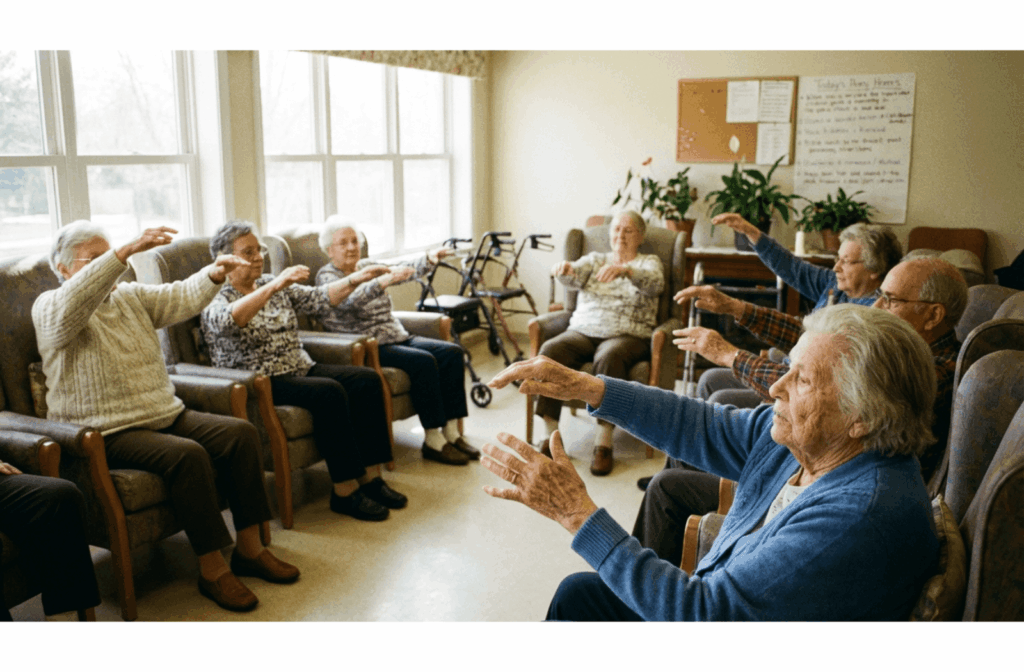
You don’t need to get on the floor to experience the benefits of yoga. Chair yoga offers seated poses that can improve your flexibility, balance, and relaxation. This approach allows you to stretch and strengthen without putting pressure on your knees or hips.
How to Start a Safe Exercise Routine
When you begin any new fitness plan, following some simple tips for physical activity can help you create a routine that is both sustainable and comfortable.
- Warm Up and Cool Down: Always spend a few minutes before you start with some gentle movements to prepare your body. Afterward, take time to cool down with some light stretching to help your muscles recover.
- Start Slow: You don’t have to do a long workout from day one. Begin with shorter sessions, maybe just 10–15 minutes, and gradually increase the time and intensity as you feel stronger.
- Listen to Your Body: Pay attention to how you feel. It’s normal to have some light muscle soreness after a new activity. However, if you feel sharp or persistent pain, it’s a signal to stop and rest.
How Supportive Care Promotes an Active Life
Support in Assisted Living
In an assisted living community, you receive support with daily needs, which frees you to focus on the activities that bring you joy. It offers a balance of helpful care and an enriched lifestyle, making it easier to join fitness classes or go for a daily walk.
Personalized Approaches in Memory Care
For those with Alzheimer’s or other forms of dementia, memory care programs offer specially designed activities. These provide opportunities for gentle movement and engagement in a secure and supportive setting, tailored to each person’s abilities.
Options for Short-Term Stays
Respite care provides a temporary living solution that also includes access to community events and activities. It’s a way to experience a supportive environment while getting the care you need for a short period.
Live an Active and Connected Life
Staying active is a journey, and having support can make all the difference. At Gardens of Carleton, the team is dedicated to creating an environment where you can pursue your wellness goals with encouragement and connection. Schedule a tour to discover a community that helps you live an enriched life every day.